

Lord Buddha’s teachings : ค้นหาหนังสือธรรมะ หน้า 4 / 12
หน้าหนังสือทั้งหมด
182
Characteristics of a True Buddhist
are like any of them and if we have performed our duties as true Buddhists yet or not.
A true Buddhist must exhibit the following characteristics:
1) Belief in the Lord Buddha’s Enlightenment. It is
This text outlines the defining characteristics of a true Buddhist, emphasizing belief in the Lord Buddha's Enlightenment, adherence to the 5 precepts, understanding the Law of Kamma, and maintaining
67
Management and Care in Monastic Life
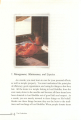
7. Management, Maintenance, and Exercise
As a monk, you must learn to care for your personal effects, as well as temple property. You must understand the principles of efficiency, good organization,
As a monk, it is vital to understand the importance of caring for both personal and temple property. All items in the temple are seen as belonging to Lord Buddha, donated by individuals out of respect

6
Clear-minded Youths: The Dhamma for Teenagers
Preface
Clear-minded Youths (The Dhamma for teenagers) has 6 stories about Buddhist children in Lord Buddha Period. There are Buddhist and non-Buddhist children.
For studied about how to build the r
Clear-minded Youths (The Dhamma for teenagers) presents six engaging stories about Buddhist and non-Buddhist children from the Lord Buddha's era. The book aims to cultivate religious faith among child
20
ความประทับใจของชาวต่างชาติที่มีต่อพระพุทธศาสนาในประเทศไทย
A FOREIGNER'S
IMPRESSION OF
BUDDHISM
IN THAILAND
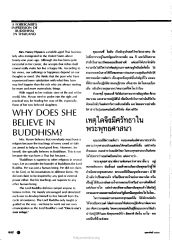
Mrs. Nancy Hyson is a middle-aged Thai business
lady who immigrated to the United States about
twenty-one years ago. Although she has been quite
succes
lady who immigrated to the United States about twenty-one years ago. Although she has been quite successful in her career, she accepts that riches itself cannot really make her live a happy life. Acco
37
The First Monk Ordained by the Buddha: Kondanna
The first monk ordained by the Buddha personally, was Kondanna. He was the first of Lord Buddha's disciples, and Buddhism's first monk. He was ordained following Lord Buddha's first Sermon entitled th
The first monk ordained by the Buddha, Kondanna, was the first disciple who became a Stream-enterer after the Buddha's first sermon in Isipatana. This sermon allowed him to see the Dhamma. The Buddha
187
The Sacred Formulas of Luang Phaw Wat Paknam
For example, if there were statements about constructing a
Dhamma Hall or a monk's shelter soon, then this must happen.
In short, the temple must produce results as soon as it can.
Thus, the first sac
The teachings of Luang Phaw Wat Paknam emphasize three sacred formulas essential for temple prosperity: cleanliness, diligent teaching of Dhamma, and frequent meditation practice. Cleanliness is vital
191
The Significance of the Dhammacakka Pavattana Sutta
Siddhattha's footsteps. When Siddhattha was training him-self under the auspices of Ālara and Udaka it was Koṇḍañña who was also to train himself in Siddhattha's footsteps. Thus, Koṇḍañña, along with
The Dhammacakka Pavattana Sutta is pivotal in Buddhism, offering a master-plan for all subsequent teachings by the Buddha. It was delivered to a group of five adept meditators, setting a clear framewo
76
Understanding the Terms Kevala and Dhammakāya in Buddhist Texts
Generally, the term ‘kevala’ is translated either as ‘only’ or ‘entirely.’ It is observed that, whenever the term appears together with another word that conveys the meaning of ‘emanating,’ ‘illuminat
This text explores the interpretation of key Buddhist terms such as 'kevala', which denotes 'only' or 'entirely', particularly in contexts associated with illumination. The term 'dhammakāya', often li
102
Wisdom and the Dhammakāya in Buddhist Teachings
Some of the qualities or forms of wisdom listed in the text are exclusive to Buddhas such as omniscience (sabbaññutāna), intrepdity (vesārajjanāna), and the ten supreme intellectual powers of a Buddha
The text highlights unique qualities of wisdom exclusive to Buddhas, including omniscience and the ten intellectual powers. It discusses the dhammakāya as the embodiment of a Buddha's inner wisdom, di
45
The Teachings of the Buddha: Understanding Enlightenment
Suzanne Jeffrey
why we are here and where do we go after death. So, we have some questions regarding His life: for example, why did he spend six years in self-mortification? Is the number six signifi
In this teaching, Luang Por discusses the significance of the Buddha's life and his journey towards enlightenment. Born into wealth and possessing unique qualities, the Buddha sought wisdom from an ea
34
The Universal Love of the Lord Buddha
personal interest. It is the kind of love that the Lord
Buddha had after his enlightenment. Although he had
accompanied Princess Bimba for many lifetimes to
pursue Perfections, he could finally make a
The text reflects on the profound love exemplified by the Lord Buddha following his enlightenment. He released personal affections to pursue spiritual ordination and achieved enlightenment, marking th
43
Understanding the Noble Eightfold Path
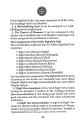
Noble Eightfold Path is the most auspicious of all the virtuous teachings of the Lord Buddha.
4. A Wish-fulfilling Jewel: It can be compared to a wish-fulfilling jewel of eight facets.
5. The Chariot
The Noble Eightfold Path is central to Buddha's teachings, likened to a wish-fulfilling jewel. It consists of eight components: Right View, Right Intention, Right Speech, Right Action, Right Livelihoo
181
Understanding Internal and External Fools in Buddhism
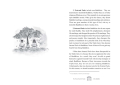
1) External Fools include non-Buddhists. They are
determined to demolish Buddhism, whether they are of other
religious affiliations or not. They typically try to cast aspersions
upon Buddhist monks. W
The text discusses two types of fools in Buddhism: External Fools, who are non-Buddhists aiming to undermine the faith by misrepresenting its teachings, and Internal Fools, who are Buddhists lacking r
4
The Impact of Pāṭimokkha Rules on Monastic Life
Unlike the *Sutta*, once any rule of the *Pāṭimokkha* has been set down, it will affect the daily life of all monks. If any monk breaks it, he must admit for his offence. Therefore, it is hard to imag
The Pāṭimokkha rules, once established, significantly influence the daily lives of monks within the sangha. Any monk who breaks these rules must confess to the offense, which underscores the importanc
175
Training Oneself in Non-Recklessness by Practicing Austerity
Chapter 40
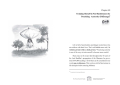
Training Oneself in Non-Recklessness by Practicing Austerity (Dhütanga) 4
Life is full of uncertainties and danger awaits those who are reckless with their lives. The Lord Buddha once sa
Chapter 40 emphasizes the significance of non-recklessness through the practice of austerity as taught by the Lord Buddha. It highlights that life is filled with uncertainties and that reckless behavi
54
Understanding the Origin of Suffering in Buddhism
2.2 The Origin of Suffering as a Cause
In explaining the Origin of Suffering, the Buddha intended to make clear that the suffering experienced by living beings has craving as its cause. As soon as the
In this examination of the Buddha's teachings, the Origin of Suffering is explained as being rooted in craving, which leads to a cycle of suffering. The relationship between the Origin of Suffering an
58
Chanting and Meditating in Buddhism
4. Chanting and Meditating
When the Buddha was alive, his disciples could listen to him preach and extol the virtues of the Dhamma everyday. However, after the Buddha passed away from this world, his
After the Buddha's passing, his disciples engaged in chanting and meditation to keep the teachings of Dhamma alive. Vatta involves chanting in homage to the Triple Gem: the Buddha, the Dhamma, and the
40
Understanding Dhammakāya in Aṅgāṇā-sutta
In brief, contemporary academics refer to the term dhammakāya in the Aṅgāṇā-sutta either as a noun or an adjective. As a noun, the term is interpreted mostly as the Buddha’s teachings collected togeth
The term dhammakāya is interpreted in contemporary academia as both a noun and an adjective. As a noun, it denotes the Buddha’s teachings, while as an adjective, it refers to the nature of the Tathāga
11
WBSY Sangha Unity Declaration
WBSY SANGHA UNITY DECLARATION
We, the young monastic delegates from more than thirty countries assembled here for the fourth conference of the World Buddhist Sangha Youth at Wat Phra Pathom Chedi on
The WBSY Sangha Unity Declaration was made by young monastic delegates from over thirty countries during the fourth conference. Taking place at Wat Phra Pathom Chedi on December 14, 2007, the declarat
44
Meeting with Luang Por Dattajevo
Meeting #6
June 8, 2009 - Ashram
I did not see Luang Por for several months after our last chat. I left the Peace Revolution after helping them re-organize and re-imagine the project for the coming y
In June 2009, a group meets with Luang Por Dattajevo at his Ashram to discuss a book project on the life of the Lord Buddha. The meeting includes questions from the Peace Revolution team and a writing